The MAONO PD100X combines USB convenience with an XLR output, making it a flexible option for gaming, streaming, podcasting, and voice recording.
This maono pd100x review focuses on how its connection choices, USB-only controls, and noise-reduction features fit different creator setups.
MAONO PD100X Review Summary
The quick verdict
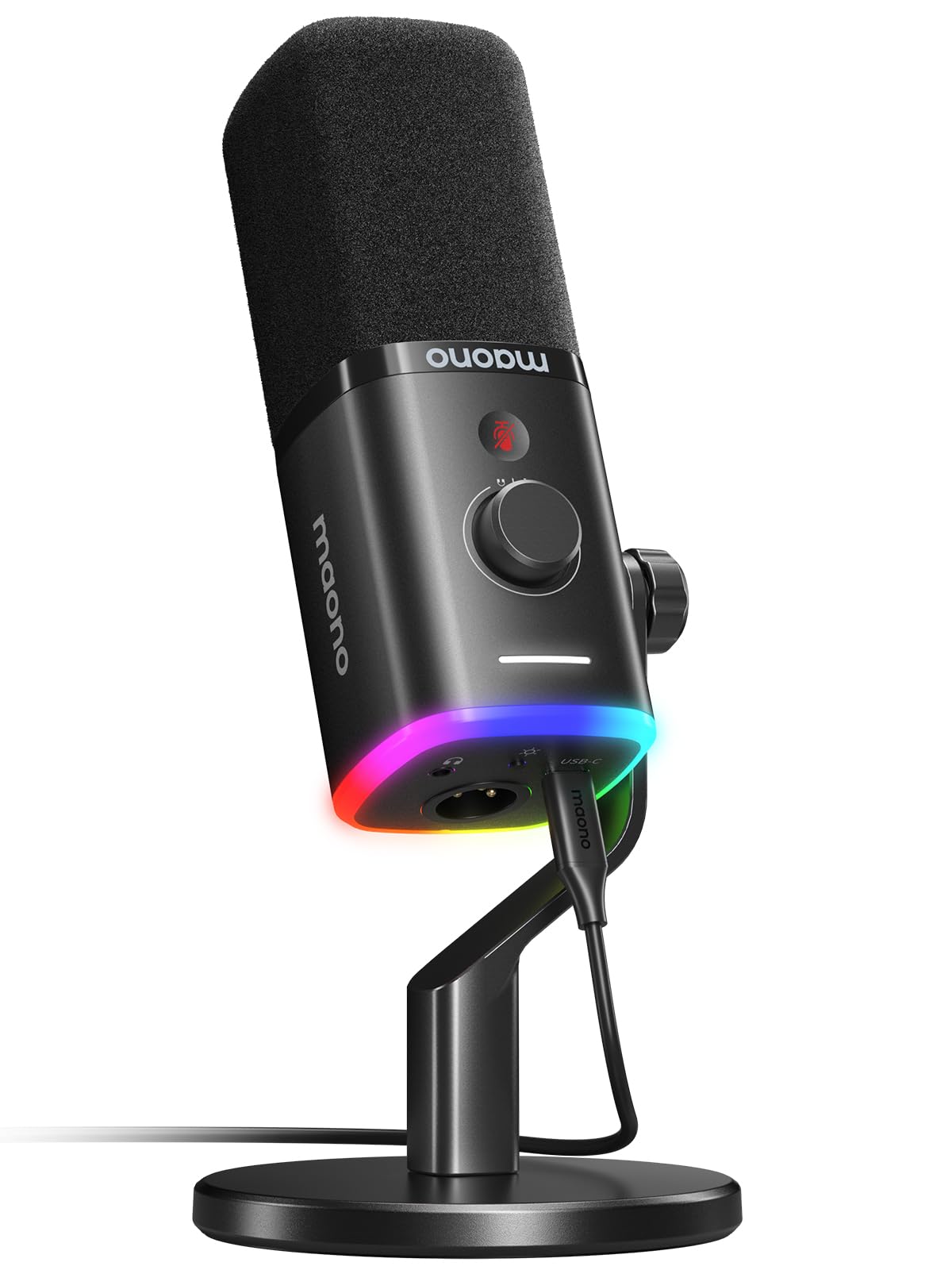
1,000+ ratings
Read Amazon ReviewsMAONO PD100X
A practical fit for streamers and podcasters who want a USB-first dynamic mic with an XLR option for a later studio setup.
- USB and XLR connectivity support computer-based setup or connection to an audio interface or mixer; the XLR cable is not included.
- A customized cardioid dynamic capsule is designed to capture voice while reducing ambient noise.
- The stated frequency response is 40 Hz–16 kHz, with 24-bit/48 kHz sampling over USB.
- MaonoLink software provides adjustable noise reduction and control of RGB color and brightness over USB.

Pros
- USB and XLR give the mic flexibility across simple computer setups and compatible audio gear.
- USB users get convenient on-mic mute, gain, monitoring, and headphone controls.
Consider before buying
- The mute, monitoring, gain, headphone, RGB, and software noise-reduction features depend on USB and do not carry over to XLR operation.
- An XLR cable is not included, so XLR users should account for a separate cable and compatible mixer or interface.
Read the full review summary
The PD100X is designed to serve both newcomers and creators who may eventually use a mixer or audio interface.
USB provides plug-and-play setup, headphone monitoring, a tap-to-mute control, gain and monitoring adjustment, configurable RGB lighting, and software noise reduction. XLR offers a path into compatible audio equipment, though an XLR cable is not included.
Its dynamic capsule and cardioid pickup pattern are intended to focus on voice while reducing the effect of surrounding noise.
That makes it a reasonable desktop choice for gaming chat, streaming, and spoken-word recording, especially when the USB controls are useful.
Keep in mind that its RGB, mute, knob, headphone monitoring, and software features are available only over USB.
The buying factors
MAONO PD100X Scorecard
Editorial scores reflect listed features and buyer fit; they are not laboratory measurements or customer ratings.
Connection flexibility
USB and XLR support beginner-friendly computer use as well as connection to a compatible audio interface or mixer.
USB controls
Tap-to-mute, gain and monitoring adjustment, and a headphone jack give USB users several practical controls at the mic.
Noise management options
The cardioid capsule and adjustable software noise reduction offer ways to manage surrounding sound, with the software features limited to USB.
Streaming convenience
Plug-and-play USB, headphone monitoring, mute, and customizable lighting suit a desk-based streaming setup.
Upgrade flexibility
The XLR connection can fit into a mixer or audio-interface setup, but buyers will need a separate XLR cable.
Setup simplicity
USB is presented as a straightforward starting point, while XLR use depends on compatible audio gear.
Key Features and Specifications of MAONO PD100X
- USB and XLR connectivity support computer-based setup or connection to an audio interface or mixer; the XLR cable is not included.
- A customized cardioid dynamic capsule is designed to capture voice while reducing ambient noise.
- The stated frequency response is 40 Hz–16 kHz, with 24-bit/48 kHz sampling over USB.
- MaonoLink software provides adjustable noise reduction and control of RGB color and brightness over USB.
- USB-only controls include tap-to-mute, a gain and monitoring knob, and a built-in headphone jack for real-time monitoring.
- RGB lighting offers three modes and eight color options, with the option to adjust it or turn it off.
Pros and Cons of MAONO PD100X
Pros
- USB and XLR give the mic flexibility across simple computer setups and compatible audio gear.
- USB users get convenient on-mic mute, gain, monitoring, and headphone controls.
- The cardioid dynamic design and adjustable USB noise reduction offer useful voice-focused tools.
- RGB lighting can be customized or switched off to suit a desk setup.
Consider before buying
- The mute, monitoring, gain, headphone, RGB, and software noise-reduction features depend on USB and do not carry over to XLR operation.
- An XLR cable is not included, so XLR users should account for a separate cable and compatible mixer or interface.
- The feature set is most complete in a USB desktop workflow; buyers planning to rely on XLR should check which controls they need during recording.
Who Should Buy MAONO PD100X?
Good fit
Consider the PD100X if you want a dynamic mic that can start as a direct USB connection and later connect to an audio interface or mixer.
For gaming, streaming, or podcasting at a computer, its on-mic mute, gain and monitoring control, headphone monitoring, and adjustable RGB can make routine adjustments accessible.
It also suits creators who want voice-oriented noise-management options. The cardioid capsule is designed to limit ambient sound pickup, while MaonoLink offers adjustable noise reduction in USB mode.
These design features may help in a lived-in room, but room placement and mic technique still matter; check that the software controls fit your preferred setup.
If you expect to use XLR, plan for the cable and compatible audio equipment separately, and decide whether you can do without the USB-only controls in that workflow.
Who should skip it
Skip this model if you need its mute, monitoring, RGB, and software noise-reduction controls to remain available while connected through XLR. Those features are specified for USB use.
Look elsewhere if your setup requires a wireless mic or a supplied XLR cable. The PD100X is a wired USB/XLR design, and the XLR cable is not included.
How the MAONO PD100X Fits a Creator Desk
USB is the feature-rich route
For a new streamer or podcaster, USB combines the mic connection with its practical controls: mute, gain, monitoring volume, headphone monitoring, and software adjustments.
The controls make the PD100X easier to adapt at the desk, while its XLR path lets the connection plan change later. The tradeoff is that the added controls are tied to USB.
XLR gives a route into audio gear
The XLR output supports use with a mixer or audio interface, which can suit a creator building a more equipment-centered recording setup.
This connection does not include a cable, so check your gear and cable needs before choosing it. Also consider whether the USB-only functions matter to your workflow, since they are not listed for XLR use.
Noise features are adjustable, not a room fix
A cardioid pickup pattern is intended to focus on sound in front of the mic, and MaonoLink can adjust noise reduction over USB.
Those are useful tools for voice recording in a home or gaming space, but they do not replace sensible mic positioning or room management. Buyers who want software adjustment should confirm their planned connection is USB.
Check the complete desk setup
The listed package description identifies a desktop stand, while the mic includes a headphone jack for real-time monitoring.
Before buying, consider where the mic will sit, whether the supplied stand suits your desk, and whether you need other mounting hardware.
That practical fit can matter as much as lighting or software options in a compact streaming area.
Alternatives to MAONO PD100X
Instrument Dynamic Microphones alternative
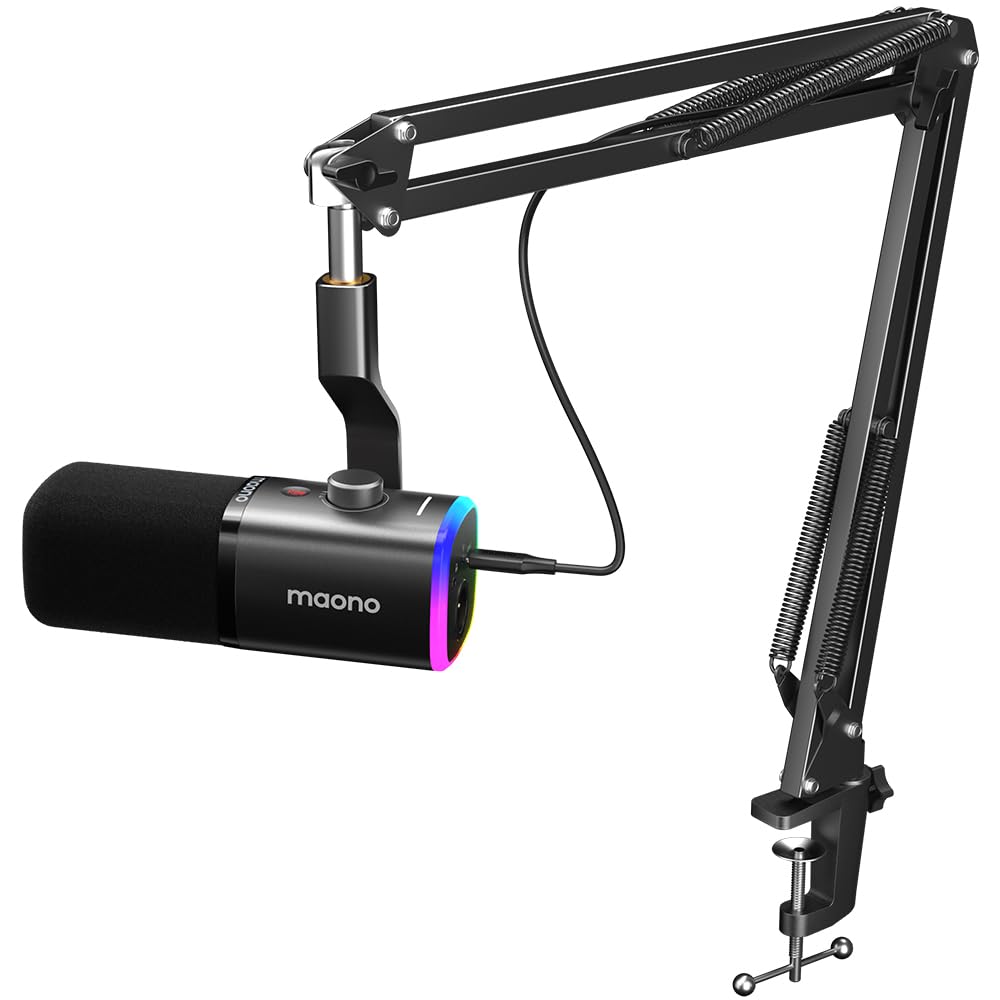
1,000+ ratings
Read Amazon ReviewsMAONO PD100XS
Consider the PD100X if a desktop stand suits your setup. The PD100XS may fit better if you want a boom arm included and prefer its described lighting options; its listed controls and software functions are also USB-only.
- The PD100XS is also a USB/XLR dynamic mic with software noise reduction, mute, monitoring controls, and RGB.
- Its description specifies a boom arm and lists three lighting modes with nine color options.
- The PD100X offers USB and XLR, a desktop stand, and USB-only mute, monitoring, RGB, and noise-reduction features.
Battery-focused alternative
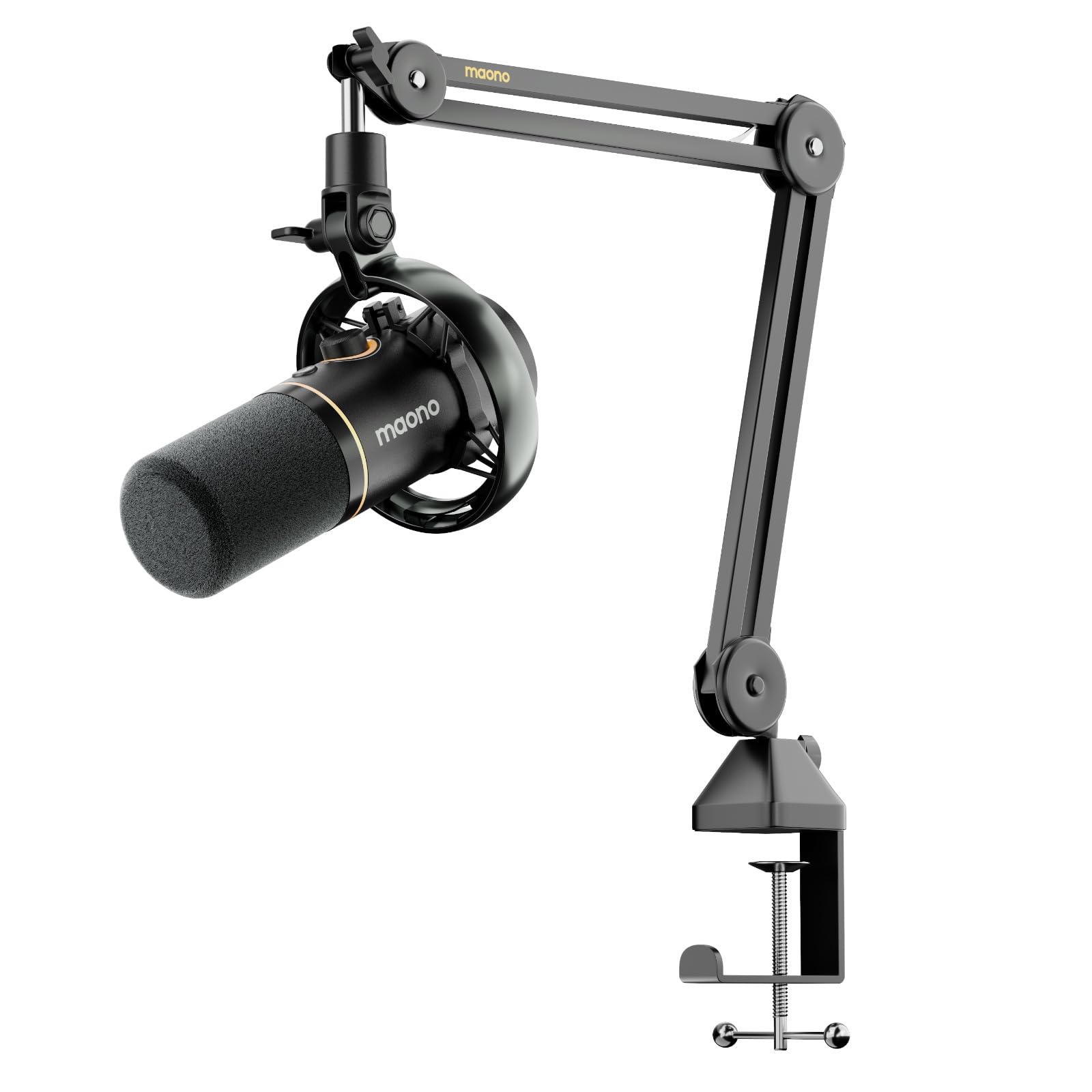
800+ ratings
Read Amazon ReviewsMAONO PD200W
Choose the PD100X for a simpler wired desktop setup with USB controls and an XLR option. The PD200W better suits buyers who specifically need wireless use, a supplied boom arm, or a two-mic interview arrangement.
- The PD200W supports wireless, USB, and XLR connections, includes a boom arm, and supports connecting two wireless microphones to one receiver for separate-track recording.
- Its software offers preset modes and adjustments, and the description gives up to 60 hours of battery life with RGB off.
- The PD100X is a wired USB/XLR desktop mic with USB-only controls and RGB lighting.
Is MAONO PD100X Worth It?
The MAONO PD100X is worth considering for a streamer, gamer, or podcaster who wants USB convenience now and an XLR connection option for compatible gear later.
Its most useful everyday controls and software features are available in USB mode, where it offers a practical combination of mute, gain, monitoring, headphone access, and adjustable RGB.
Before choosing it, account for the separate XLR cable if you plan to use that connection, and make sure the USB-only controls align with your workflow.
For a straightforward wired desk microphone with multiple setup paths, the PD100X presents a useful, adaptable feature set.
Your review at a glance
1,000+ ratings
Read Amazon ReviewsMAONO PD100X
A practical fit for streamers and podcasters who want a USB-first dynamic mic with an XLR option for a later studio setup.
- USB and XLR connectivity support computer-based setup or connection to an audio interface or mixer; the XLR cable is not included.
- A customized cardioid dynamic capsule is designed to capture voice while reducing ambient noise.
- The stated frequency response is 40 Hz–16 kHz, with 24-bit/48 kHz sampling over USB.
- MaonoLink software provides adjustable noise reduction and control of RGB color and brightness over USB.